

Raw Material Proportioning and Pre-treatment
The production of filled masterbatch begins with precise formulation, typically using calcium carbonate as the primary raw material, combined with carrier resin, dispersing agents, and other additives. Some enterprises in the Liaoning region utilize high-quality local calcium carbonate ore, processing it through crushing and grinding into an ultrafine powder to ensure a uniform particle size distribution. Moisture content must be controlled during pre-treatment-generally kept below 0.1%-to prevent adverse effects on the subsequent melt-blending process.
Melt-blending and Granulation
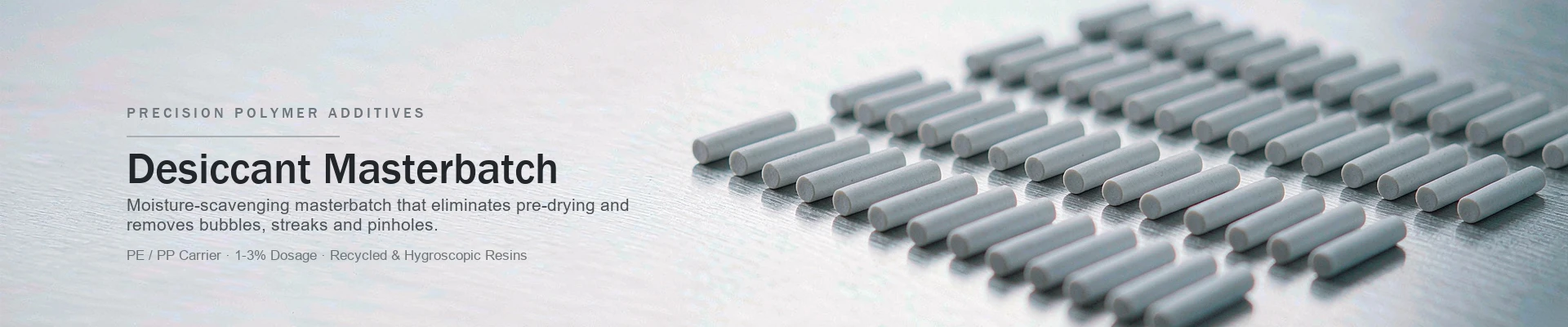
Melt-blending of the raw materials is achieved using a twin-screw extruder, where screw speed and temperature control are critical factors. Processing temperatures are typically set between 150°C and 180°C to ensure thorough integration of the calcium carbonate and resin. The addition of dispersing agents effectively minimizes particle agglomeration and enhances the product's dispersibility within plastic matrices. The blended material is extruded through a die, cooled, and pelletized to produce filled masterbatch granules with a diameter of approximately 2–4 mm.
Quality Testing and Packaging
Finished products undergo rigorous quality testing, covering parameters such as calcium carbonate content, particle size distribution, and melt flow index. Some enterprises in Liaoning utilize automated testing equipment to ensure product consistency. Qualified masterbatch is typically packaged in moisture-proof plastic bags (20–25 kg per bag) to facilitate use by downstream enterprises.